From simply stuffing keywords to understanding the intent behind them, the entire practice of SEO has evolved significantly. This is primarily because users are now looking for more direct answers. Due to this change in behavior, search engines also now focus on delivering results that best answer their queries, rather than just showing exact phrase results. This shift has made search intent a core factor in how content is ranked. Understanding this can result in improving engagement, reducing bounce rates, and boosting conversions. In this article, we will discuss the concept of search intent, how it can help with better SEO rankings, and how you can create an optimized strategy with it.
What Is Search Intent?
In simple terms, search intent refers to the reason behind a user’s search query. It can be a purpose or goal that they want to achieve when they search for something on search engines. As a result of this, search engines have also evolved from matching exact phrases to understanding what the user actually wants. This helps search engines to deliver results that best answer the user’s query.
While understanding search intent is essential, it does not mean that keywords have become redundant. Therefore, it is important to understand the difference between keywords and search query intent. Keywords are words or phrases that a user types into a search engine, like Google. Search intent, on the other hand, is the meaning behind those words. Although two users may use similar keywords, the results can differ based on their intentions. Due to this, understand that intent plays a bigger role in SEO than matching keywords alone.
However, one important thing you need to understand about search intent is that the meaning behind phrases is not of a single type. Instead, it is divided into four main types of search intent:
- Informational Intent: This keyword search intent means that the user is either looking to learn something or find answers. “How SEO works?” is a common example of an informational intent keyword.
- Navigational Intent: This intent of the keyword means that the user is looking to reach a specific website or brand. For example, “Google Search Console login.”
- Commercial Intent: This keyword intent means that a user is researching a product or service before making a purchase. A common example of a commercial intent keyword is “best budget smartphones.”
- Transactional Intent: This intent means that the user is ready to take an action. This action can be buying a product or service, or signing up for a newsletter. “Buy yoga mat online.”
By identifying and matching keywords’ intent, you can optimize your content for better alignment with what the user actually wants.
Also Read: SEO Tips For Google My Business To Boost Local Reach
How to Identify Search Intent Behind a Query
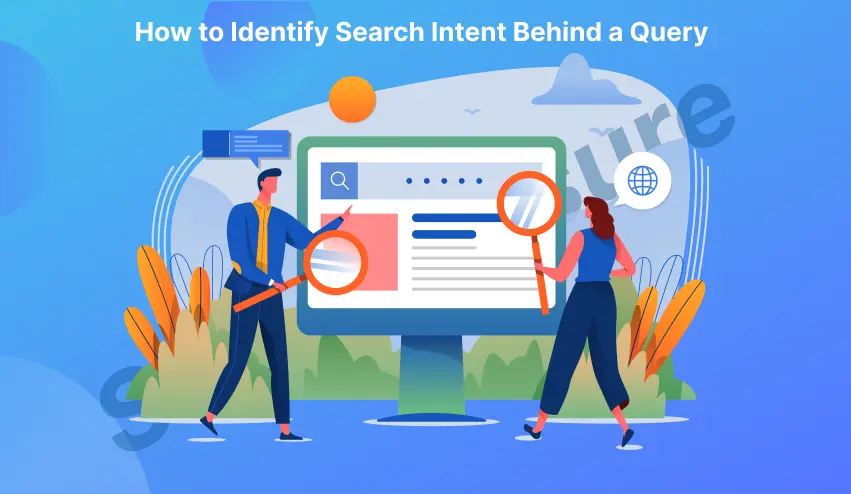
In order to ensure that your content ranks well on search engines, identifying the search intent behind users’ queries is essential. However, identifying the intent is a task that is much easier said than done, as there are multiple factors you will need to check.
Nonetheless, the fastest way to understand the intent lies in observing what already ranks on search engines. You can do this by checking top results and identifying patterns like:
- Do the results include blog posts, guides, or tutorials? (Informational intent).
- Are they product or service pages? (Transactional intent).
- Are they comparison articles? (Commercial intent).
- Are brand pages ranking at the top? (Navigational intent).
Checking these factors can help you decode what the user wants. By doing so, you will be able to tailor your content accordingly. Moreover, search engines prioritize content that matches intent. Therefore, SERP acts as a direct indicator for ranking.
Aside from this, there are also certain words within search intent keywords that clearly signal the user’s intent. Some examples of these modifiers include:
- Informational: How, what, guides, tips, and examples.
- Navigational: Brand names and logins.
- Commercial: Best, top, comparison, and reviews.
- Transactional: Buy, price, deals, and sign-ups.
By consistently analyzing SERPs and keyword modifiers, you will be able to align your content precisely with the user’s expectations. As a result of doing so, you will get better organic rankings.
Search Intent Keywords vs Traditional Keywords
In traditional SEO, the main focus was to target generic keywords with high search volume. However, due to changes in user behavior and search engine updates, like the Google Core update, the practice is no longer optimal. While traditional SEO can still help to drive traffic, it often fails to deliver meaningful results. Search intent keywords, on the other hand, focus on understanding why and what the user is searching for.
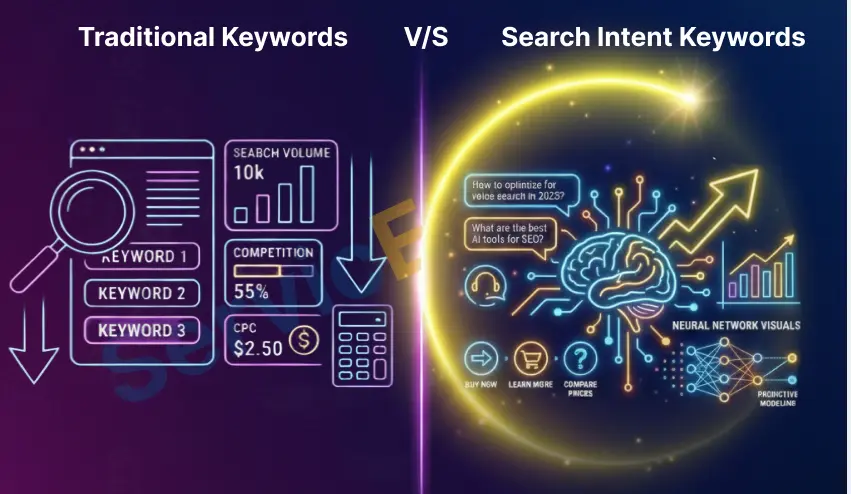
In addition to this, generic keywords are also broad, and their purpose is often unclear. To explain this with an example, a keyword like “SEO tools” may have a high search volume, but it does not clearly define whether the user wants information, comparisons, or to make a purchase. In contrast, search intent keywords, like “best tools for keyword research,” clearly reflect the user’s goals. This makes it easier for both the search engines and businesses to understand what the user wants.
Do note that even keywords with high search volume do not mean better ranking. Nowadays, search engines, like Google, ranks those content higher that is intent-driven. Ensuring that your content answers the user’s search intent can result in improving engagement, time on page, as well as conversion. All these factors will contribute significantly to long-term SEO success. Therefore, the best choice is to use intent based keywords for your content.
| Aspect | Traditional Keywords | Search Intent Keywords |
| Focus | Targets exact words or phrases | Targets the user’s purpose behind the query |
| Search Volume Priority | High search volume is the main goal | Relevance and intent matter more than volume |
| User Clarity | Often vague or broad | Clear indication of what the user wants |
| Traffic Quality | Brings mixed or less relevant traffic | Attracts highly relevant and qualified traffic |
| Conversion Potential | Usually low due to unclear intent | Higher because intent matches content |
| SEO Effectiveness | Short-term traffic gains | Long-term ranking and engagement benefits |
| Bounce Rate | Often high | Generally lower |
| Content Alignment | One-size-fits-all content | Content tailored to specific intent |
Search Intent In SEO Content Strategy
When it comes to improving ranking, search intent plays a central role. Due to this, the content should be based solely on keywords, but must be intent-driven, focusing on what users actually want. This approach will help you better understand which stage the user is at and how you can meet their requirement. Additionally, the approach will also support your long-term search engine optimization goals.
Another method you can use for keyword intent in SEO is using topic clusters. Topic clusters prove to be more useful when built around intent rather than isolated keywords. To start with this, you can create a pillar page that targets broad intent-driven topics. This will help to support your related subtopics that address specific user questions or needs. The benefits of building topic clusters around intent include:
- Pillar pages will cover the core topic depth.
- Cluster pages will target long-tail and intent based keywords.
- All pages will contribute to the same overall goal.
Another ideal method of using search intent to rise in SEO rankings is internal linking. By creating internal links with intent-focused pages, you can direct users to the targeted pages. The key reasons that make internal linking for search intent important for SEO are:
- Allows you to link informational content to commercial or transactional pages naturally.
- Search engines favor intent-relevant anchor text rather than generic links.
- Allows you to smoothly guide users through different stages of the funnel.
Also Read: Step-By-Step Guide To What Is SEO and How It Works

Why Search Intent Should Guide Your SEO Strategy?
Building a successful SEO strategy requires more than just targeting high-volume keywords. Instead, you need to clearly understand the search intent behind each query and align your content accordingly. By doing so, you will be able to ensure that your content is relevant, engaging, and valuable to both search engines and the audience. Moreover, by prioritizing user needs and expectations, you can create content that not only attracts quality traffic but also builds trust and authority over time.
FAQs
What are the main types of search intent?
Informational, navigational, commercial, and transactional are the four main types of search intent.
How can I identify the search intent behind keywords?
In order to identify the search intent behind keywords, you will need to analyze the search results for the specific keyword. Moreover, you can also make use of keyword research tools or even AI like ChatGPT to understand the search intent behind a keyword.
Can one page target multiple search intents?
Yes, one page can target multiple search intents. However, it is not an optimal choice as search engines will only rank the page that best answers the user’s query. Therefore, targeting multiple search intents on a single page might seem like an excellent idea, but in reality, it will make it difficult for your page to rank well and attract the audience.
What are the 3 Cs of search intent?
The 3 Cs of search intent refer to Content Type, Content Format, and Content Angle. Following them can help you better optimize your content with intent-focused keywords.
Can search intent improve user experience?
Yes, search intent can improve the overall ser experience by effectively answering their query. As a result of this, the user will be more likely to stay longer on the page and feel more satisfied with the answers.

Aadiv Atharv is a results-focused Digital Marketing Specialist with expertise in performance marketing, social media strategy, and conversion optimization. He excels at crafting creative, ROI-oriented campaigns that help brands connect with the right audience. His blend of creativity and technical skill makes him a powerful force in today’s competitive digital landscape.