
What is social commerce?” is a question that’s more than just another buzz term in digital marketing circles: it’s when scrolling becomes shopping. “What is social commerce if not the reason a casual follower becomes a conversion player?” Every time a user taps on a product tag, watches a live shopping, or buys directly from a video, it’s a culmination of “what is social commerce.
In a currency called attention, social commerce is redefining shopping by combining content, conversation, and conversion into a seamless flow. From inspiration to conversion, and all through to instant purchase, it’s a definition that’s also redefining online shopping behaviors, and if your brand hasn’t joined it yet, then you are already behind.”
This blog will unveil every aspect of social commerce, from what is social commerce, how it works, the role of social commerce platforms, to why it has become the fastest growing trend in digital marketing and e-commerce.
What is Social Commerce?
Social commerce is an emergent type of e-commerce that leverages the usage of social networks and online media to offer transactional interfaces for businesses and consumers. Social commerce may include actions such as product discovery, product reviews, product ratings, sharing, product recommendations, and transactions.
In short, social commerce takes advantage of the increased usage of social media sites by consumers in promoting the products or services offered on the sites that consumers log into on a daily basis.
Why Social Commerce Matters in 2026?
Social commerce matters in 2026, because the way people shop has fundamentally changed in today’s time. The global commerce market has exploded in recent years and continues rapid growth.
- The modern consumer is no longer able to distinguish between shopping and usage of social media; in fact, it is all intertwined in one activity. People tend to see products on their scroll, taking recommendations from the content creators, friends, and communities, not from advertising.
- Most significantly, social commerce is relevant in 2026 because, rather than focusing on one-off sales, it enables long-term relationships to be built. While brands are consistently communicating and offering genuine and meaningful content, it is possible to engender long-term supporters in their customer base. Rather than being the face of a trend, social commerce is actually on track to form the backbone of online brands.
As social platforms increasingly shape the realm of purchasing, integrating commerce with the effective planning of social media marketing services will enable the marking of relevance and responsiveness to the evolving behavior of users.
Top Social Commerce Trends in 2026
Social commerce trends are evolving faster than ever, especially as we move into 2026. If you also want to elevate your business then here are the top social commerce trends you should not miss.
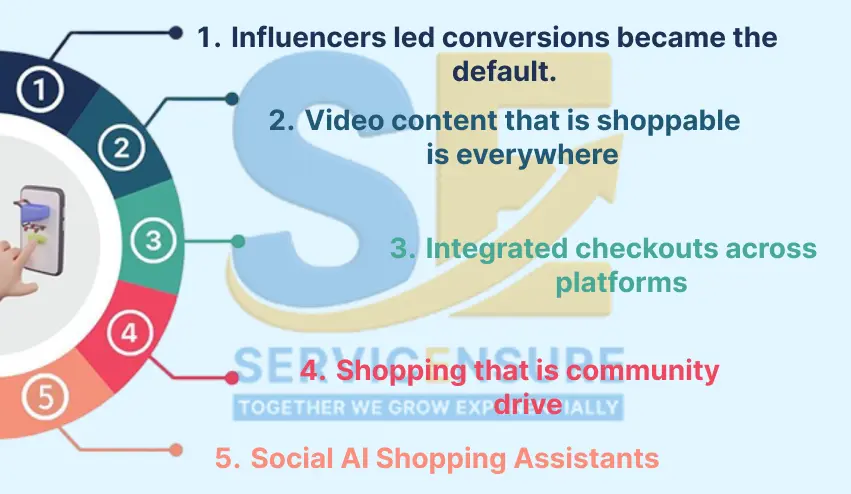
Influencers Led Conversions Became the Default
Creators in 2026 are not just to multiply the reach—but convert. Engaging videos, affiliate links and storefronts will continue to perform better than only add to cart ways.
Video Content That is Shoppable is Everywhere
Short form videos that showcase products are everywhere, as a result shoppable video commerce is exploding. Videos on platforms like instagram, tiktoks, and youtube shorts include the direct shopping tags. Meaning users can go directly from watching to buying in seconds.
Integrated Checkouts Across Platforms
In 2026, in-app checkouts options will be non-negotiable. Users do not want to be redirected to the native websites, that is why platforms are improving the payment experiences.
Shopping That is Community Driven
Niche communities and shopping groups are the powerful conversions hub. These social commerce trends allow brands to engage with highly targeted audiences and get direct feedback.
Social AI Shopping Assistants
There will be more involvement from chatbots that use Ai technology, and assistants within the platform will become involved in the process of product discovery, answering questions, and even making product suggestions. The assistants are considered smart since they provide customized experiences that feel like conversations, pushing the purchasing process forward without leaving the social context.
What is the Difference Between Social Commerce and E-commerce?
Ecommerce represents a wider description of buying and selling products or services through online transactions. Ecommerce includes selling through different channels such as electronic marketplaces, websites, and apps of retail stores.E-commerce is based on the concept of the websites or apps where the visitor comes with the sole intent of purchasing, views the products, and commits the payment in the process of e-commerce.
On the other hand, Social commerce is all about direct sales on these platforms, namely Instagram and Facebook. In social commerce, purchases commence with content, a reel, a story, an influencer post. The users arrive at these platforms not as customers, meaning those who come looking to purchase; instead, they arrive as they want to view or interact with content. The whole process, as mentioned above, is completed in one app.
Also Read: Top 5 Social Media Strategies to Boost Engagement in 2026
Best Social Commerce Platforms You Should Know in 2026
Today, with changes in consumer behavior toward the discovery and consumption of products within the feed, it becomes necessary for businesses to understand which network is most suited for their purpose. The presence of an integrated shopping interface, shopping-enabled formats such as posts and videos, and live shopping within the network have become integral parts of a social commerce strategy. Below are the top networks leading this charge.
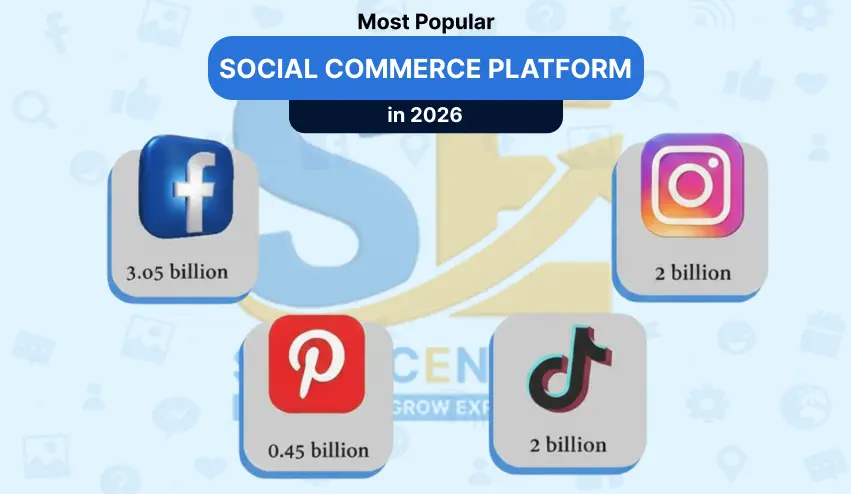
One of the most popular social commerce sites currently is Instagram. It has a number of tools that make it possible for companies to display a product and for a consumer to buy the product without needing to visit the business’s own site, such as “shoppable feeds, product tags, Stories shopping, and checkout.”
Fashion, beauty, and lifestyle brands also do very well here because the visual aspect of storytelling is very important in purchase decisions.
The social commerce aspect allows consumers to purchase products using social media. This is enabled on Facebook using “Facebook Shops,” “Marketplace,” and “Messaging.” Businesses can use comments and “Messenger” to communicate with customers.
Facebook is still one of the trusted platforms of social commerce for community-driven shopping and selling.
TikTok
TikTok has repurposed the concept of social commerce with the rise of the short-video and live-commerce platforms. This means that the product has the potential for going viral within the span of 24 hours through content and trends on the application. Users on the application are able to shop directly from the app through the “TikTok Shop”.
Pinterest is essentially a discovery tool. People come to the site with purchase intentions. This makes it one of the most underrated platforms that also offers various social-commerce features. Shoppable Pins enable businesses to cater to customers who are already organizing their purchases.

Practical Social Commerce Tips to Watch For in 2026
Social commerce works best when it’s practical, consistent and audience first. Here are some actionable social commerce tips to watch for in 2026.
Sell Through Content, not Just Products
In the context of social commerce, consumers do not open an application with the intent to shop but for the intent to consume content. The aim here is to provide value through short videos or posts that educate, entertain, or solve a problem. Product tagging should occur in a natural way and not be forced. This can be effective for both new and existing businesses for the purposes of building and enhancing recall.
Make Checkout Frictionless
The key to the success of social commerce lies in convenience. Facilitate checkouts within the app, keep the product description simple, and make the purchase process streamlined. Consumers will avoid sales even for their favorite brands if the purchasing process is complicated.
Scale the winners
Invest in the top performing creators, reels and trends. And scale those with prospecting and retargeting that speaks to social users.
Use Data to Refine not Guess
Track engagement, sales and conversions on a regular basis, startups should learn and gain quickly, while the established ones should optimize based on performance data.
Build a community, not just a sales channel
Engage with comments, respond to direct messages, and be present in your community. Social commerce is an engagement-driven ecosystem. A brand that turns a social media platform into a community rather than a catalog, look for improvements in loyalty purchases. Contact us, and start building your social commerce strategy today.
Key Features That Defines What is Social Commerce
A comprehension of what is social commerce is linked to an understanding of its characteristics, which include:
- The rise of “shoppable content” represents another key development in the future of e-commerce
- In-App Checkout: No Redirect to External Websites
- Influencer Integration: Influencers promoting the product through their authenticity
- Live Shopping
- Real-time engagement and instant buying
Such traits work to decrease any friction associated with shopping, making it a social process.
Benefits of Social Commerce For Business
Social commerce is longer an add-on to digital selling but is a powerful growth driver for modern brands. Because it’s simply an extension of how consumers interact online, social commerce helps businesses connect and engage audiences, converting more powerfully than traditional channels. Below are benefits of social commerce in business, which cannot be missed.
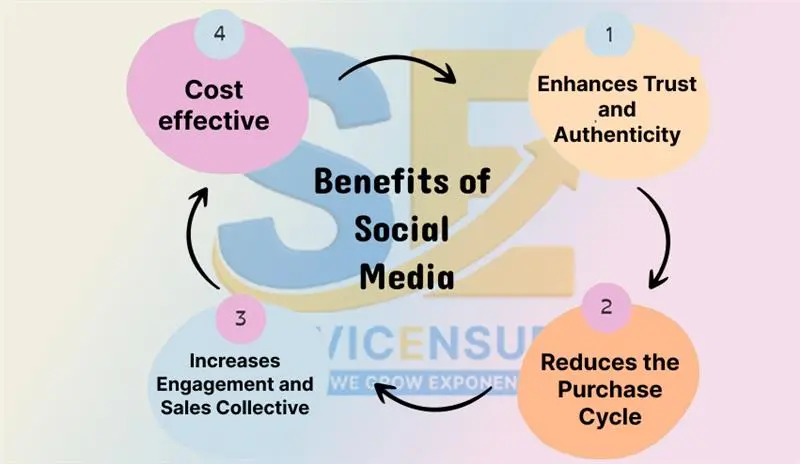
Enhances Trust and Authenticity
A big motivation for brands to invest in social commerce is trust. Customers find it much more genuine and valid if others use and recommend products.
Reduces the Purchase Cycle
Social commerce removes additional steps. From discovery to check-out, everything occurs in one place.
Increases Engagement and Sales Collective
Social commerce differs from the traditional concept of eCommerce as it provides engagement as well as purchase opportunities to customers. Likes and shares affect sales directly.
Cost Effective
For startups and small businesses, social commerce platforms offer lower entry barriers compared to building full-scale eCommerce websites.
Hence if you are looking for something that will be for the best benefit of your business then social commerce cannot be left behind, as of now many people are searching for the best social media services, you can stand out with the correct guidemap of social commerce.
Future of Online Shopping with Social Commerce
The future of ecommerce will be social-first. Consumers, particularly Generation Z and millennials, would rather view content about consumer goods through creators and reels on social networks rather than advertising.
With enhanced capabilities in areas such as AI-powered recommendation or live commerce, it can be noticed that social commerce becomes more relevant every day. It will be an area where early adopters will be highly advantaged.
Conclusion
Social commerce is no longer a passing trend; rather, social commerce is gradually emerging as a fundamental element in the process by which people learn about, trust, and ultimately make their purchasing decisions online. By effectively integrating content, communities, and effortless e-commerce experiences, businesses can target their customers precisely where they already exist.
For that reason, engagement with an effective digital marketing company may provide the clarity required to incorporate social commerce within the framework of growth while still being authentic. Ultimately, social commerce goes beyond the goal of enhanced sales because, at the end of the day, social commerce is all about making the connection.
Want to discuss your social commerce strategy in person? 👉 Get directions to our office
FAQs
Q1. What is social commerce?
A1. Social commerce is the buying and selling products directly through social media platforms, combining content and seamless checkout experience.
Q2. How does social commerce work for business?
A2. Social commerce allows brands to showcase products, through posts and videos, allowing users to discover and purchase without even leaving the platform.
Q3. Why is social commerce important?
A3. Social commerce makes your customers feel closer to your brand, and this in turn can help you better engage with your customers.
Q4. What are the top social commerce trends to watch?
A4. Some of the popular social commerce trends include, Live shopping, influencer led sales, in-app checkouts and AI powered product recommendations.
Q5. What are the tips to succeed in social commerce?
A5. put your focus on the content that is authentic, have user generated reviews, and consistent audience engagement.

Ved is a skilled Digital Marketing Expert known for building data-driven strategies that boost brand visibility and lead generation. With hands-on experience in SEO, PPC, and content marketing, he helps businesses scale their online presence and achieve measurable growth. His analytical approach and constant learning mindset make him a go-to expert for modern marketing challenges.