Whether big or small, online reviews are the first thing that users check when engaging with a business. To ensure that users feel confident when engaging with a business, established organizations maintain a positive online reputation. However, online reputation is one of the most common factors that many small-scale businesses ignore. As a result of this, they find it difficult to engage with the audience and convert them. While this can lead to major problems, small business online reputation management is its simple solution. Therefore, in this article, we will discuss the best practices of online reputation for small businesses, so that your brand can take a stand and compete in the ever-changing online market.
What Is Small Business Online Reputation Management Exactly?
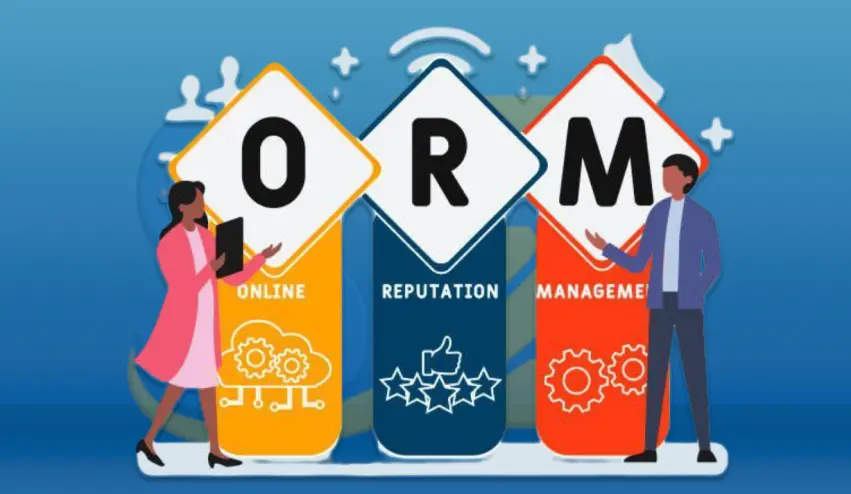
Small business online reputation management is the process of monitoring, influencing, and improving how your business is perceived by the online audience. While the definition for ORM sounds the same for both small and large businesses, its practices are significantly different for both. This is primarily because small businesses often have a lower budget. Aside from the difference in its practices, ORM is not about hiding criticism or manipulating reviews. Instead, its main aim is to ensure that users find your business reliable and trustworthy.
Also, unlike personal branding, online reputation management is not about an individual image, but about the entire identity of your company. This is because it covers multiple digital touchpoints where users form opinions, such as the ones we have listed below.
To help you better understand this, online reputation management includes:
- Reviews: This includes platforms like Google Reviews, Yelp, and Justdial, where customers leave their experience with your business.
- Search Results: This includes results that include your business name when a user searches for a related keyword.
- Social Mentions: This includes comments, tags, and mentions on social media platforms that involve your business.
- Brand Perception: This is shown through social media and review sites, and it includes the overall feelings of users associated with your business.
How Small Businesses Can Gain Competitive Advantage With ORM?
Online reputation is not just about looking good, but is about staying competitive. In the highly competitive online market where customers have dozens of options, you will need to create a robust online presence for your business with positive reviews to win their trust. This is where online business reputation management becomes essential.
Your online reputation will directly influence how users find your business and how much they feel confident engaging with it. Additionally, search engines also favor businesses that are trusted by users. This plays a crucial role in promoting business visibility and customer acquisition.
In addition to this, users also often trust organic results more than paid ads. By ensuring that your business has a solid online reputation, you will be able to gain a huge competitive advantage and attract potential customers to your business.
How To Manage Your Business Online Reputation?
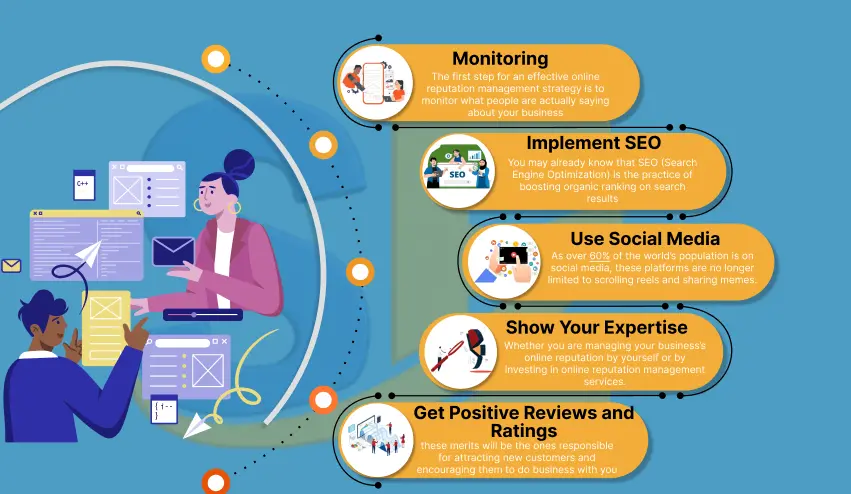
Understanding how to manage your business online reputation has become a must for every small business. This is because of the fact that every review, search result, and social comment can shape or reshape how users see your brand. In order to ensure that you manage the online reputation of your business for the best results, you can follow the practices we have listed below.
1. Monitoring
The first step for an effective online reputation management strategy is to monitor what people are actually saying about your business. Effectively monitoring the reputation of your business can help you identify problems and areas of improvement. In order to do this, you can make use of real-time monitoring tools, competitor benchmarking, and even customer surveys.
Proactive monitoring will be essential if you want to create a robust reputation for your business and attract audiences. Therefore, an ideal option is to partner up with a reliable ORM company in Gurgaon.
2. Implement SEO
You may already know that SEO (Search Engine Optimization) is the practice of boosting organic ranking on search results. However, the process of SEO is not just limited to visibility. The practice can also be used to ensure that your content is being viewed by the targeted audience only. This can be done via methods like:
- Keywords Optimization: Keywords are terms or phrases that help you identify your target audience. By optimizing your content with such keywords, you will be able to effectively attract the targeted audience.
- Controlling SERP: Negative reviews can easily tarnish the reputation of your brand. However, these reviews can be pushed down by publishing high-quality and SEO-optimized content. These types of content can not only help your business gain traction, but also control the spreading narrative.
- Local SEO: If you are running a location-based business, then local SEO is a must. This method can ensure that your business appears in high positions on local listings and maps. As a result of this, you will be able to effectively attract local customers to your business.
3. Use Social Media
As over 60% of the world’s population is on social media, these platforms are no longer limited to scrolling reels and sharing memes. Instead, they have become a growth engine for many businesses, including small businesses as well. In order to use social media for online business reputation management, you will need to:
- Consistent Branding: Whether on Instagram or LinkedIn, social media platforms can be highly competitive. Therefore, in order to get optimal results for online reputation management from these platforms, you will need to ensure consistent branding for your business.
- Crisis Management: As even a single negative review can lead to a huge setback, you need to create a crisis management plan for your business. Social media platforms are the best for this purpose, as they allow you to directly connect with the audience and inform them about the misunderstandings.
- Content Calendar: In ORM, planning is key. Therefore, instead of random posting, it is best to create a content calendar and follow the schedule. This can help your business stay consistent and maintain a positive online presence.
4. Show Your Expertise
Whether you are managing your business’s online reputation by yourself or by investing in online reputation management services, showcasing expertise will be highly important in order to get the best results. In order to do this, you can make use of industry panels, webinars, or even podcasts. These methods can signal that you are a thorough expert in your field. As a result of this, your targeted audience will feel more comfortable engaging with your business.
Additionally, you can also display your industry awards and certifications. They will assist in displaying your excellence and further contribute to promoting your online reputation.
5. Get Positive Reviews and Ratings
Online reputation is all about getting customers’ reviews and ratings, because, after all, these merits will be the ones responsible for attracting new customers and encouraging them to do business with you. In order to get reviews, you can reach out to your established customers and ask them to leave their ratings. You can do this via multiple methods, such as incentive reviews or personal emails.
Once the customers have left their reviews, you will need to respond to them in a positive and professional manner. Additionally, in case your business got some negative reviews, then instead of hiding them, you will need to address them. To do this, you will first need to understand the concern yourself, then address it. However, if it starts to escalate, then it would be best to take the conversation to a personal channel. Also, you can reach out to a reliable business online reputation management company for this purpose.
Common Online Reputation Mistakes Small Businesses Make
Most small businesses do not lose their customers due to their poor products or services, but due to common mistakes. These mistakes silently destroy trust, visibility of search, and growth in the long term. In order to make sure that you do not make these mistakes, you will need to understand them. Below, we have shared some of these common mistakes that small businesses often make.
- Ignoring Reviews: When customers take their time to provide feedback and receive no reply, this sends a negative impression. Therefore, whether positive or negative, you will need to respond to the review in a timely and professional manner.
- No Reputation Tracking: Most businesses realize the problems too late. Negative content may propagate without any supervision of the search outcomes, mentions, and reviews.
- Having No Response Policy: Lack of clear guidelines will lead to late responses or not responding at all. This causes a lack of consistency in brand voice and bad customer perception.
Turn Your Online Reputation Into a Growth Asset
A positive online reputation can lead to higher trust, visibility, and long-term success. Therefore, by handling with consistency and intent, small business online reputation management can help you create actual growth. By staying aware of how your business appears across search results, reviews, and social platforms, you will also be able to put yourself in a stronger position to adapt, compete, and thrive in an ever-changing digital economy.
About Small Business ORM (FAQs)
How long does it take to improve online reputation?
The time taken to improve online reputation depends on the current situation. However, you can see notable results within a few weeks to a few months with consistent efforts.
Can negative reviews be removed?
Some negative reviews can be removed if they violate the platform’s guidelines. As for others, they can be handled through professional and thoughtful responses.
Does online reputation affect Google ranking?
Yes, online reviews are trust signals and can affect the overall ranking of your business on Google.
Is it possible to recover from a bad online reputation?
Yes. With consistent responses, better customer experiences, and improved online visibility, a damaged reputation can be rebuilt over time.
Can social media comments impact a business’s reputation?
Yes. Public comments and messages on social platforms contribute to how trustworthy and professional a business appears online.

Aadiv Atharv is a results-focused Digital Marketing Specialist with expertise in performance marketing, social media strategy, and conversion optimization. He excels at crafting creative, ROI-oriented campaigns that help brands connect with the right audience. His blend of creativity and technical skill makes him a powerful force in today’s competitive digital landscape.