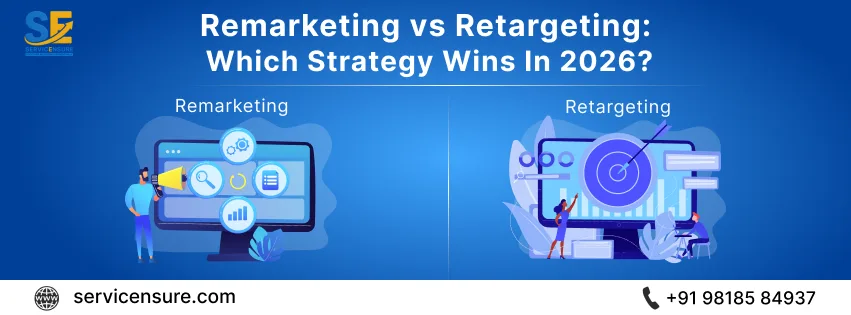
Many businesses, especially small-scale and startups, believe that remarketing and retargeting are interchangeable terms. Although they both share the same goal, which is to bring back previous users and convert them, their operations are significantly different. Due to this, understanding remarketing vs retargeting becomes essential as it can directly influence the overall success of a business. In this article, we will break down the key differences between both these practices and will help you decide which one is best for your business.
What Is Remarketing?
The simple definition of remarketing refers to re-engagement strategies by using already existing data rather than gaining new information. The practice is done by sending tailored messages or emails to previous customers. As a result of this, you can reactivate known contacts and guide them to purchase other products from your website.
Remarketing also assists in boosting loyalty and improving sales. As the practice leverages owned data, it becomes a cost-effective solution, all the while helping with long-term customer engagement.
Remarketing campaigns can run through emails or CRM data to re-engage the user. As it uses first-party data, remarketing allows businesses to craft highly personalized messages for the past users.
What Is Retargeting?
Retargeting, on the other hand, means encouraging users who have previously visited your website and left without being converted. The aim behind this tactic is to recapture the visitor’s interest who showed buying intent. The buying intent often includes product views, card additions, and even a significant time spent on your product or service pages. The method makes use of personalized ads to encourage the user to complete their purchase and guide them through the marketing funnel.
Retargeting is most commonly delivered through display ads on search engines and social media platforms, like Meta, LinkedIn, and X. These ads naturally appear within the user’s feed, reminding them about the products, services, or even pages that they previously interacted with.
Similar to remarketing, retargeting also makes use of already existing data of the previous user, rather than running ads to attract newer audiences. Retargeting is one of the most essential campaigns in digital marketing, as around 97% of customers do not buy a product or service from their first visit. Retargeting allows you to re-engage with these customers and encourage them to complete their action.
What Are The Benefits of Retargeting Ads and Remarketing?
While both retargeting and remarketing are different from one another, they work towards the same goal. Below, we have listed some of the key benefits of both these practices.
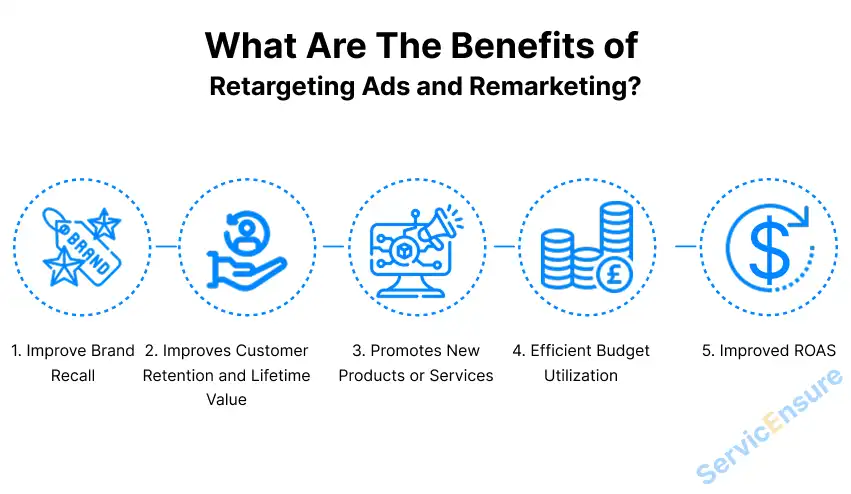
1. Improve Brand Recall
Remarketing helps to improve brand recall through repeated brand exposure to already existing customers. This repeated, consistent exposure is shared on multiple platforms, like Google Display Network and Facebook. This significantly improves the chances of the customers recognizing your business in the crowded digital market. Therefore, making it one of the primary reasons why remarketing is important.
Retargeting, on the other hand, also helps to improve brand recall by nudging the customer about the product or service they previously showed interest to. These campaigns can be both organic and paid. For example, cold, personalized messages can be sent to the user about their cart. Retargeting ads can also be used to help a user recall your business and complete their purchase.
2. Improves Customer Retention and Lifetime Value
Remarketing campaigns aim to attract previous customers and encourage them to take further action. As a result of this, it improves both customer retention rates as well as lifetime value. Both customer retention and lifetime value, in turn, help build a stable foundation for long-term business growth. Investing in reliable Pay-Per-Click services can help ensure both of these factors.
As for retargeting, it reaches users who have previously shown interest in your offerings. This encourages the user to revisit your website and complete their purchase or other action, like signing up for a newsletter. This, in turn, helps to retain the customer, all the while creating lifetime value.
3. Promotes New Products or Services
Remarketing campaigns target previous customers who purchased products or services from your website, and might show interest in more of your offerings. By crafting tailored messages and using the customer behavior, you can promote your newer products or services to them and encourage them to make a purchase.
Retargeting makes use of already existing data, like tracking pixels, to show tailored ads to already existing customers. As these users have already shown interest in your offerings, they are more likely to explore or purchase new or related offerings.
4. Efficient Budget Utilization
Remarketing is a highly efficient form of budget utilization as it specifically targets users who have previously purchased your products or services. This results in lowering the cost per acquisition as well as wasted ad spend. Furthermore, remarketing campaigns can also be run on social media platforms, which further helps with utilization. However, do note that there are significant differences in running remarketing campaigns in social media and on search engines. To ensure that your campaigns run successfully, it is advised to invest in reliable social media marketing services.
In retargeting, you do not need to reach a cold audience. Instead, you can direct your ads to warm users, who have already shown interest in your business. These ads can be used to promote new products or services, or even to guide the user to complete their action. As the user has previously shown interest, you do not need to test with different ad copies. This, in turn, helps to reduce waste spend, all the while ensuring budget utilization.
5. Improved ROAS
One of the primary benefits of remarketing in Google Ads is that it can improve ROAS (Return on Ad Spend). This is because these campaigns only target high-intent users who have previously shown interest in your products or services. This results in significantly boosting conversion rates at a lower CPA.
Retargeting re-targets users who have previously shown interest in your business. This results in effectively driving conversion from a high-intent audience without raising CPA. Furthermore, retargeting campaigns can also be highly personalized, which also results in significantly boosting conversion rates.

Remarketing vs Retargeting In Digital Marketing: Key Differences Explained
To help you better understand the differences between remarketing vs retargeting, we have shared a thorough comparison table below.
| Aspects | Remarketing | Retargeting |
| Primary Goal | Rebuild relationships and encourage repeat engagement or purchases. | Bring previous visitors back to the website to complete a conversion. |
| Data Sources | First-party data such as customer emails, CRM lists, and purchase history. | Tracking pixels and cookies are collected when users visit a website. |
| Audience Type | Existing customers, subscribers, or qualified leads. | Website visitors who left without completing an action. |
| Ads Examples | Cart abandonment email, loyalty program promotion, product recommendation email. | Ads showing products a user previously viewed on a website. |
| Best Use Cases | Customer retention, upselling, cross-selling, loyalty campaigns. | Recovering lost traffic, cart abandonment ads, and lead generation. |
| Marketing Objectives | Strengthen long-term customer relationships. | Increase immediate conversions from warm audiences. |
When To Use Remarketing?
Remarketing is most effective when you want to reconnect with users who are already aware of your brand. Rather than targeting a completely new set of audience, remarketing focuses on nurturing existing relationships and encouraging the user to take another action. This strategy is widely used across Google Ads, where advertisers create audience lists and deliver personalized ads to their existing customers.
Below, we have shared some key scenarios to help you better understand how does remarketing work in Google Ads.
1. Subscription Services
If you offer subscription-based services like SaaS platforms or membership programs, then you can use remarketing for continued engagement. Common strategies for this include:
- Reminding the user about trial expirations.
- Promoting premium upgrades.
- Encouraging inactive users to return.
2. Loyalty Program
Remarketing is also highly effective when it comes to nurturing customers and strengthening long-term relationships. This is often done through loyalty programs and some of its common examples include:
- Advertising loyalty rewards or exclusive discounts.
- Promoting members-only offers.
- Encouraging referrals.
3. Promoting Seasonal Offers
Remarketing campaigns are not just about selling products or services. Instead, they can also be used to promote seasonal offers to already existing customers. Some common examples of running remarketing campaigns for this purpose include:
- Holiday sales.
- Festival discounts.
- End-of-season clearance.
Do note that although remarketing campaigns can be used for multiple scenarios, the results they provide can vary significantly depending on the types of remarketing in Google Ads you run.
Contact us today and discover tailored digital marketing strategies for your business.
When To Use Retargeting?
Running retargeting campaigns should be your go-to choice if you want to re-engage with users who visited your website but did not complete a desired action. As retargeting focuses on already existing customers, it becomes a powerful strategy for improving conversions and maximizing advertising budgets on platforms like Meta Ads Manager. If you are wondering how does retargeting work on Meta, it uses Meta Pixel, which gathers data about the user and their action. When the user leaves your website, they will see your advertisements on platforms like Facebook and Instagram.
Below, we have listed some key scenarios where it is best to use retargeting campaigns.
1. Ecommerce Websites
It is fairly common for online stores to experience high browsing but significantly lower conversion rates. Retargeting, however, can help effectively convert those customers into buyers. Some effective strategies for this aspect include:
- Showing ads for the exact or related products that the user viewed.
- Sending personalized emails to remind the customer about their abandoned cart.
- Offering limited-time discounts or promotions.
2. SaaS Product Trials
If you are finding it difficult to sell your SaaS products, then offering a free trial with retargeting ads can prove to be especially helpful. Retargeting campaigns can help with this process by:
- Reminding a user to finish the trial signup process.
- Promoting key features and benefits of your SaaS products.
- Encouraging upgrades to the paid plans.
3. Visitors Who Viewed Specific Product Pages
Most users who view product pages often have a higher purchase intent, but often leave to compare other options. Retargeting these users can result in improving the likelihood of them completing the purchase. In order to do this, you will need to:
- Run ads that feature the exact product that the user viewed.
- Recommend similar or other related products.
- Offer limited-time discounts or free shipping.
Remarketing vs Retargeting: Common Mistakes to Avoid
While both remarketing and retargeting provide a plethora of benefits, there are some common mistakes that can entirely block your access to these benefits. Below, we have listed the common mistakes that you need to avoid when running remarketing or retargeting campaigns.
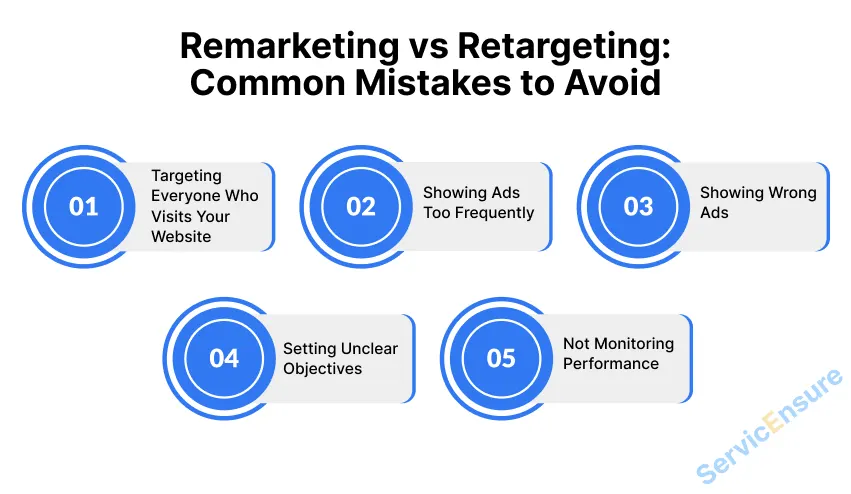
1. Targeting Everyone Who Visits Your Website
One of the biggest mistakes that many businesses, especially smaller ones, make is placing all website visitors into a single audience list. Not all visitors visit a website to purchase a product. This means that not all visitors carry the same intent or interest. Therefore, target the user based on their specific actions, like the page they visited or the product they added to their cart.
2. Showing Ads Too Frequently
Ads can help improve brand awareness, along with other remarketing and retargeting purposes. Excessive ad exposure can also lead to ad fatigue. If this happens, then the user may start to ignore your ads or even start disliking your entire brand.
3. Showing Wrong Ads
Delivering the right ad to the right user at the right time is the key to success for both remarketing and retargeting. However, a surprisingly high number of businesses struggle with this equation. One of the most common mistakes businesses often make here is showing ads for products or services to the user that they have not browsed or added to their carts.
4. Setting Unclear Objectives
Another common mistake that you need to avoid is setting unclear objectives for your remarketing and retargeting campaigns. To avoid this mistake, you will need to consider the goal of your campaigns, like selling more products or services, or encouraging the user to complete their purchase. Rather than making broad objectives, you will need to make clear and specific goals for your campaigns.
5. Not Monitoring Performance
Remarketing and retargeting are not among the “set-and-forget” campaigns. Instead, they require constant monitoring to ensure optimal results. Proactive monitoring will help you further optimize your campaigns and make informed decisions. Therefore, it is best to timely monitor the campaigns, all the while measuring key metrics.
Choose The Right Strategy For Your Business Success
To explain the difference between remarketing vs retargeting in simple terms, remarketing focuses on encouraging previous customers to interact with your business and take new actions. Retargeting, on the other hand, specifically targets users who did not complete an action in the first place. Both practices are significantly different from one another, and choosing the right one is highly crucial for reaching the right audience and making effective progress in the competitive market.
FAQs
What are the different types of retargeting?
There are four key types of retargeting, including Search Ads, Dynamic Ads, Email retargeting, and video retargeting.
Which platforms are best for remarketing?
Google Ads and Meta Ads prove to be the best for remarketing. If you are remarketing B2B services, however, then LinkedIn Ads proves to be the ideal choice.
How does retargeting work on Meta?
Retargeting on Meta by using Meta Pixel, which is a code snippet on your website. This code helps you understand the user behavior, like which pages they viewed or what products they added to their carts.
What is PPC in remarketing?
Pay-Per-Click in remarketing is a paid marketing strategy that focuses on already existing customers. In this advertising model, you only need to pay when a user actually clicks on your ad, rather than just viewing it. This makes it a highly cost-effective remarketing strategy.
What is the main purpose of remarketing and retargeting ads?
The main purposes of both remarketing and retargeting are different from one another. Remarketing focuses on encouraging already existing customers to re-engage with your business and take a new action, like purchasing new products or services. As for retargeting, it focuses on targeting customers who engaged with your website but did not complete an action. The aim in retargeting is to encourage the customer to complete their action, like purchasing the product that they already added to their cart.

Aadiv Atharv is a results-focused Digital Marketing Specialist with expertise in performance marketing, social media strategy, and conversion optimization. He excels at crafting creative, ROI-oriented campaigns that help brands connect with the right audience. His blend of creativity and technical skill makes him a powerful force in today’s competitive digital landscape.