The process of managing the reputation of a brand involves monitoring, managing, and influencing the perspective of the audience. This perspective can only mean two things: either the brand has a positive or a negative reputation. Whether you are a startup looking for a foothold or an already established business, learning and implementing reputational management techniques can help to build awareness and improve conversion. To help you with that purpose, we will discuss the best brand reputation management tips with you through this article.
Why Is Brand Reputation Management Essential?
A strong brand reputation is not limited to driving sales and credibility, but is also the key to fostering a sense of loyalty and trust in the audience towards your business. Moreover, when your audience will see accolades and mentions, they will be more likely to engage with your business and can be converted rather easily.
However, brand reputation management is not without challenges. Even a single negative review can drastically impact the entire reputation of your business. Once your credibility has been broken, then it may take you a long time to repair it. Therefore, the best ORM company in Gurgaon takes proactive measures to prevent the scenario from happening.
Top 5 Brand Reputation Management Tips
Although there are a plethora of practices when it comes to managing the reputation of a brand, most of them are variations of one another. Below, we have listed the best brand reputation management tips to elevate and manage the reputation of your business.
1. Regularly Monitor Your Online Presence
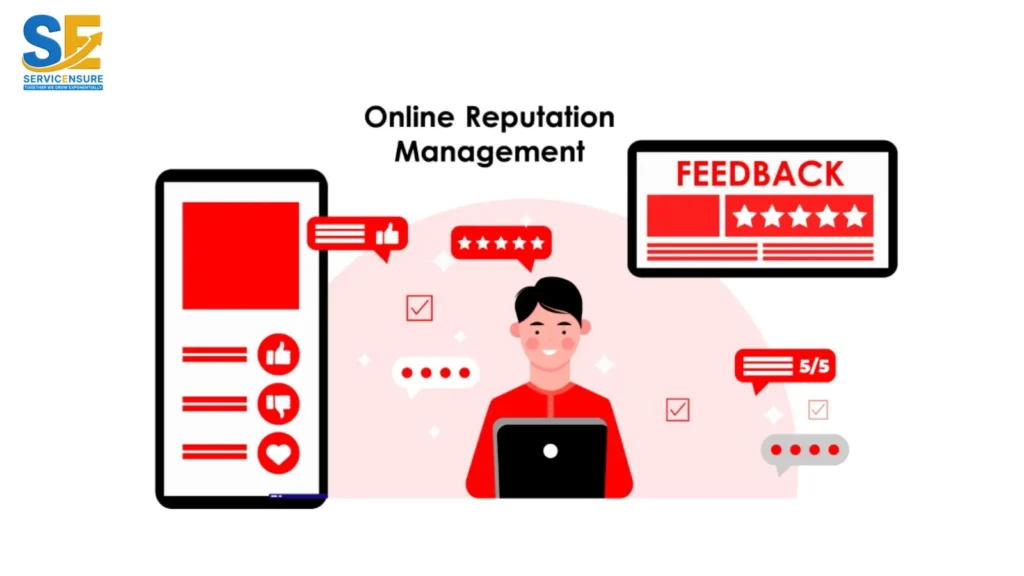
The reputation of your business can change overnight, and this change is not always for the best. Therefore, it is essential to actively monitor the online presence of your business. But do you know what the actual metrics are that you will need to check? Below, we have mentioned some key metrics that you can regularly monitor to determine your brand reputation.
- Customer Reviews: Look at the reviews of your Google Business Page, social media posts, and also on other platforms where you have listed your products or services.
- Blog Posts: Regularly check the comment section of your blog posts to determine whether your content was able to answer the user’s query or not.
- Hashtags Attached to Your Business: You can make use of a social listening tool, like Social Sprout or Hootsuite, to identify the users who have tagged your business in their posts or comments.
By proactively monitoring the reputation of your business, you will be able to notice any and all kinds of shifts in the reputation of your business. Furthermore, it will also help differentiate between the working and redundant strategies. You can use this data to further improve your strategies for better results, thus making it one of the ideal brand reputation management tips.
2. Craft & Publish Positive Content
Creating and publishing engaging and relevant content is among the best online reputation management tips. Content such as blogs, videos, or infographics allows you to share the right information regarding your products or services. Mentioned below are the key ways in which you can build a strong online presence by crafting and publishing content.
- Post Consistently: Regular posting can help you to improve your brand awareness, just make sure that your posts are relevant, engaging, and positive.
- Share BTS: BTS refers to Behind The Scenes, and by sharing such content through reels, stories, or even posts, you can foster a sense of trust in your audience.
- Maintain a Uniform Visual Identity: This can help your brand become instantly recognizable, enhance professionalism, and enhance both trust and engagement in your audience base.
- Share How-To Guides: These types of content are highly-regarded to establish authority and make your business appear as a trustworthy source of information.
- Add FAQs: By sharing FAQs, you will be able to attract customers by effectively answering their queries.
As a result of this, you will be able to guide your conversation around your business on online platforms. Additionally, these types of content will also assist in improving the awareness as well as the credibility of your brand.

3. Use SEO
SEO refers to Search Engine Optimization and is the practice of improving a website’s ranking on search results via organic methods. By crafting SEO strategies and implementing them, you will be able to secure top positions for your brand on relevant keywords. In order to drive the reputation of your brand with SEO, you can follow the listed below practices.
- Build High-Quality Backlinks: Good backlinks can help you establish trust and authority with businesses similar to your niche.
- Optimize “About Us” Page: A crisp and clear About Us page will tell your audience what your business is about and what your motive is. This can result in fostering a sense of trust and loyalty in the audience.
- Prioritize User Experience: Make sure that your website pages have optimal loading speed and are also optimized for mobile interfaces.
As a result of using SEO, you will be able to establish a strong credibility for your business in the competitive online market.
4. Crisis Management
Although it can take a considerable amount of time to build brand reputation, the reputation can quickly fall apart due to a crisis. A crisis can damage your public relationship as well as the standing of your business in the online market. Therefore, it is essential to have a crisis management plan prepared in advance. You can build a robust crisis management plan by implementing the factors we have listed below.
- Perform Risk Assessment: Identify potential crises for your brand and prioritize risk management based on the likelihood and the severity of the crisis.
- Respond Quickly: Quick responses to a crisis can help mitigate the damage, preserve reputation, and maintain trust.
- Develop Response Measures: Create a step-by-step process for identifying and responding to the crisis.
- Issue Public Apology (if needed): A sincere and clear apology can help rebuild trust and mitigate damage.
A crisis management plan can help you effectively overcome unfortunate events and will also assist in cushioning the damage.
5. Be Transparent
Being transparent about your business’s missions, values, and operations is one of the best tips for online reputation management. This is essential because about 81% of users consider buying a product or service from a brand they completely trust. By being transparent, you will be able to build trust in your customers. This will result in inevitably improving the reputation of your brand. Additionally, this will also foster a sense of loyalty and will encourage the audience to engage with your brand rather than your competitors.
Common Challenges In Managing Brand Reputation
The brand reputation management tips we have listed above can assist you to monitor and influence the perception of your brand. However, there are a few challenges that you may come across while managing your brand reputation. Below, we have listed the common challenges along with their solutions.

1. Lack of Audience Trust
If your targeted audience has a difficult time trusting your brand, then they are unlikely to engage with it. This can be caused by multiple factors, such as overpromising, complicated communication, or a lack of transparency.
If you are also struggling with this challenge, then you can use the following methods to address it.
- Share real-world examples of how your business has positively impacted customers.
- Avoid exaggerated claims and clearly communicate with the audience.
- Provide timely and helpful assistance to all your customers.
2. Limited Social Media Engagement
Limited engagement in social media can be caused because of failing to keep up with the trends in the competitive market. This is among the most common challenges that brands face.
In order to overcome this, you will need to:
- Create a social media reputation management strategy.
- Publish relevant and engaging content on your social handles.
- Organize live sessions, such as Q&A or virtual sessions, to create a buzz and engage with the audience.
For a detailed look on how to use social media for brand reputation management, you can check out our article: Social Media Reputation Management Tips For Success
3. Lack of Control on Online Conversations
People are going to inevitably talk about your brand, and some of those comments can be negative. These comments can have a drastic impact on your brand’s image.
To address this challenge, you will need to:
- Continuously monitor online conversations involving your brand.
- Promptly respond to both positive and negative reviews. Acknowledge the accolades and try to address the negative feedback with proper communication.
- Avoid online arguments; instead, move the conversation to a private channel, such as direct messages or email.
Why Use Online Reputation Management Tools?
Online reputation management tools have become a necessity to effectively manage the reputation of a business. By using these tools, you will be able to open the door to the following benefits.
- Analyze Public Sentiment: ORM tools can help to analyze the emotional tone (positive, negative, or neutral) of the audience regarding your brand. This can help you understand the perspective of the audience.
- Quickly React to Reviews: You can use ORM tools to set alerts for customer feedback. As these alerts will be set in real-time, you will be able to quickly respond to reviews. Moreover, this will also prevent negative reviews or misinformation from spreading.
- Track Competitor Activities: Online reputation management tools can assist you to track your competitors. As a result of monitoring the activity of your competitors, you will be able to check how the reputation of your brand compares to the competitors.
- Data-Driven Decision Making: ORM tools will gather the data of your strategies to boost and manage reputation. By thoroughly analyzing this data, you will be able to make data-driven decisions for better results.
- Monitor Brand Mentions: Tools for online reputation management can help you keep track of your brand, products, and services mentions across platforms, such as social media and review sites, without any manual searches.
Manage & Elevate Your Brand Reputation
Managing brand reputation does not fall in the category of easy tasks, and your efforts are unlikely to show results in a fortnight. However, by following the brand reputation management tips we have included in this post, you will be able to ensure that your audience has a positive perspective of your brand. The key to promoting and managing brand reputation is staying consistent. Proactively monitor the reputation of your brand and refine your strategies to match the market trends and achieve better results.
FAQs
Online reputation management tips for crisis?
In order to manage a crisis, you will first need to pinpoint the root cause. Then, assess the situation and craft a strategy to address the crisis while mitigating the damage. Having a crisis management plan prepared in advance is one of the best online reputation management tips.
How do I know if my brand reputation is increasing or not?
You can check this by comparing past data of how the customers were responding to your brand with the recent data. This will help you understand whether your strategies proved to be useful or not.
Is social media good for brand reputation management?
Yes, using social media for managing the reputation of a brand is one of the best practices. This is because social media platforms can allow you to directly engage with your targeted audience via posts, forms, or quizzes.
What does ORM mean?
ORM refers to Online Reputation Management, and is the practice of managing and monitoring how your brand is perceived on online platforms.
How long will it take to improve my brand reputation?
Improving brand reputation is an ongoing process and can take a considerable amount of time to achieve the desired goals. However, with effective strategies and proper implementation, you may see improvement in the reputation within a few months.

Ved is a skilled Digital Marketing Expert known for building data-driven strategies that boost brand visibility and lead generation. With hands-on experience in SEO, PPC, and content marketing, he helps businesses scale their online presence and achieve measurable growth. His analytical approach and constant learning mindset make him a go-to expert for modern marketing challenges.