In 2026, a robust online presence has become a requirement for businesses of all scales and niches. This is mainly because of changes in customer behavior and rising competition. This shift has clearly highlighted why every business needs a website in 2026. A well-built website does not just promote visibility. Instead, it also ensures credibility, conversion, and measurable growth. In this article, we will discuss the core benefits you can unlock for your business by having a website and how a website can help with overall business growth.
Why Every Business Needs a Website In 2026 For Growth?
Nowadays, the growth of a business is tied closely to how customers find the brand and engage with it. Due to this, most buying decisions now begin with searches, like Google results, AI-overviews, or voice assistants. As a result of this, customers do not directly contact a brand, but first look at their reviews and compare the options at hand. A business that does not have a website will not even be considered in the decision-making process, much less influence it.
Aside from this, the rise of AI search and zero-click results has further reshaped how customers find a product, service, or even a business. This is primarily because of users’ expectations for instant answers, clear information, and credible sources. While ranking in these areas is already quite challenging, if you do not have a website, however, then it becomes completely impossible.
In addition to this, a business without a website also finds it difficult to gain the trust of audiences. This is because customers nowadays associate legitimacy with professionalism. For example, if a user searches for your business online but only finds incomplete listings or social media profiles, then it will raise doubts in their mind. This leads to further questions: why does every business need a website if they already exist on social media? The answer to this lies in control, credibility, and consistency. These are some core elements that social media cannot guarantee.
Also Read: Web Development Trends In 2026 You Need To Know
Importance of a Website For Business Growth
As user behavior continues to change and the competition rises rapidly, the importance of a website for business growth cannot be overstated. Whether you are running a startup or are part of an established organization, a well-structured website can help to attract the right audience. In addition to this, the website will also play a crucial role in building trust and turning interest into measurable results. To help you better understand how a website can directly contribute to sustainable business growth, we have shared some key pointers below.
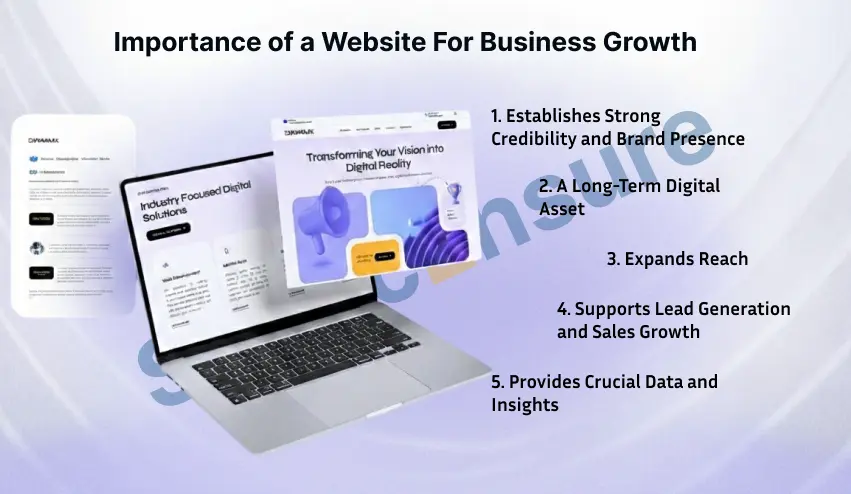
1. Establishes Strong Credibility and Brand Presence
A website is often the first interaction that potential customers have with a business. Due to this, a reliable website can quickly form visitors’ opinions on the business’s reliability, professionalism, and quality. Furthermore, a professional website for a business can also help build a strong foundation for trust. In addition to this, you can also showcase your stories, values, and expertise through the website. All this will result in giving you an advantage over the competition.
2. A Long-Term Digital Asset
Unlike paid marketing methods, where results stop coming once the budget runs out, a website can continuously generate value over time. Because of this, well-structured and responsive websites have been considered as a long-term digital asset for businesses of all scales and niches.
In order to ensure long-term growth, however, you will need to implement SEO practices while ensuring optimal content quality. This is one of the major benefits of having a website for small businesses, as it allows them to compete with already established organizations.
3. Expands Reach
Your website is not bound by any geographical restriction, except if you impose this restriction yourself. Due to this, you can reach audiences all across the globe and can actively spread your business. Furthermore, with proper optimization, your business can even appear on local searches.
This flexibility can help you to scale faster without depending on paid methods. Although this is one of the major reasons why every business should have a website, one thing you should know is that reaching global audiences can be a highly time-consuming process.
4. Supports Lead Generation and Sales Growth
This is one of the most practical benefits of having a professional website for business, as it allows you to effectively convert visitors into leads and loyal customers. With a well-optimized website, you can guide users through clear CTAs, informative pages, as well as conversion-focused content. In addition to this, you can also showcase your products, services, pricing, and unique values directly on the website. Doing so will help you to eliminate customer hesitation.
5. Provides Crucial Data and Insights
Besides attracting the right audiences, a website can also provide you with valuable data that you can use to make informed decisions for your business. These insights will help you to better understand your visitors’ behavior, traffic sources, popular pages, and conversion path. With this understanding, you can highlight the areas of improvement and optimize them for better results.
Furthermore, the data gathered on your website will also help you better understand the factors that are working and those that are not working. Over time, this data-driven approach will inevitably strengthen your marketing efforts, enhance customer experiences, and lead to effective growth in the competitive market.
Must Read: A Guide To What Is Organic Traffic & How To Drive It

Website vs Social Media: Why a Website Still Matters More?
The question of “Why do we need a website if we already have social media?” is asked by many businesses, especially small-scale and startups. Although creating a social media business profile is free and can attract an audience, the main reason why a website matters more lies in ownership and control.
| Website | Social Media |
| Full ownership | Platform-dependent |
| SEO visibility | Algorithm-limited |
| Structured conversions | Limited CTAs |
| Long-term asset | Short-term reach |
| Brand authority | Engagement-focused |
Even though social media can help to drive engagement, when it comes to building trust, conversion, and long-term growth, a website is by far the superior choice.
Who Needs a Website the Most in 2026?
As the buying journey of most customers starts online, having a strong website has become essential for businesses across multiple industries. Aside from improving visibility in the online market, a well-built website can also directly include credibility, trust, and authority. Mentioned below are some common business groups that may benefit the most from having a website in 2026.
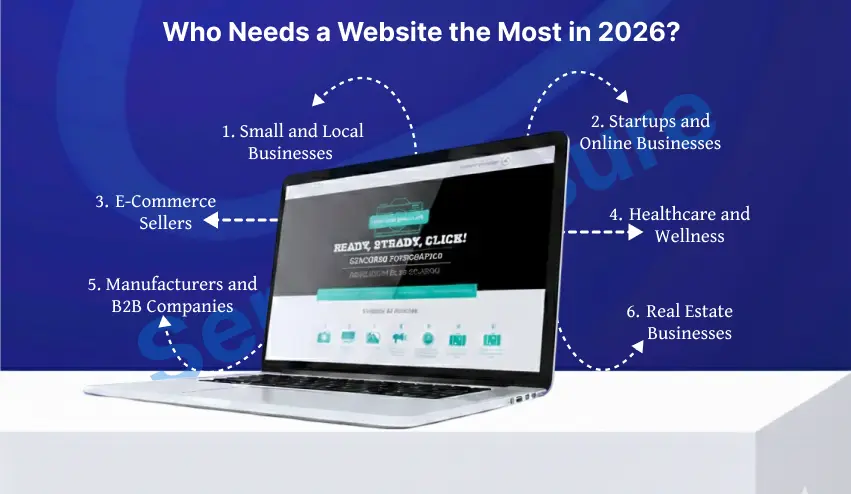
- Small and Local Businesses: From restaurants to salons, a website can showcase services, contact details, and reviews. This can result in attracting more location-specific customers.
- Startups and Online Businesses: A website can help both startups and online businesses to establish trust and compete with larger businesses.
- E-Commerce Sellers: E-Commerce sellers can get great benefits from a website, as it can provide them with complete ownership, branding, and better customer relationships.
- Healthcare and Wellness: Whether clinics, gyms, or nutritionists, a website can make it easier for their audience to book appointments, understand the process, and go through with the services.
- Manufacturers and B2B Companies: A website can act as a digital brochure. Therefore, helping suppliers showcase their services, certifications, and even attract international clients.
- Real Estate Businesses: Real estate businesses can use a website to show their properties, capture leads, and provide detailed information without relying on third-party portals.
Contact us today and discover the best web development services at the best prices.
Common Mistakes Businesses Make With Their Websites
Although businesses of all scales and niches have their dedicated websites nowadays, there are still some mistakes that many of them make. As a result of these mistakes, they find it difficult to rise in the competitive market. In order to ensure that you do not make such mistakes and leave performance on the table, make sure to avoid the common pitfalls we have listed below.
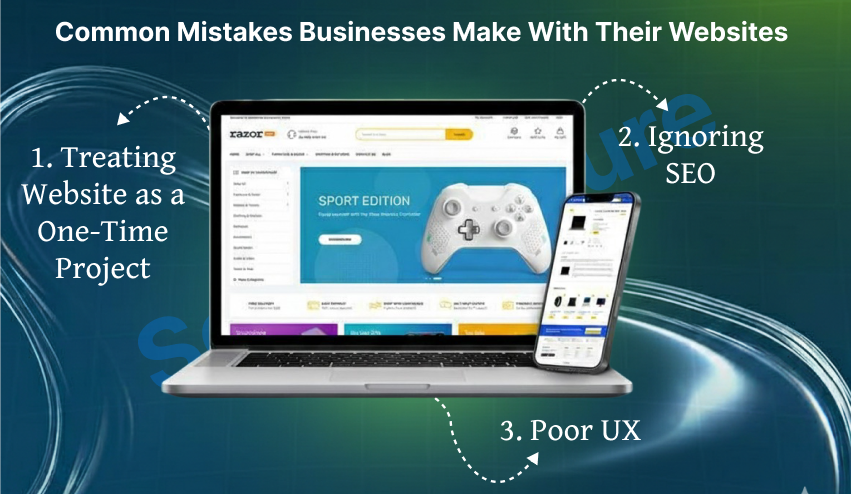
1. Treating Website as a One-Time Project
One of the biggest mistakes that businesses make is assuming that a website is a one-time project. Due to this, their content becomes outdated, and their competitors rise above them without any trouble. Moreover, search engine updates, like the Google Core update, only prioritize websites that are active, credible, and relevant.
In addition to this, outdated design and broken links can also cause a website to disappear behind the competition. In order to avoid this issue, make sure that you actively update your website and align the content with algorithm changes.
2. Ignoring SEO
SEO is a non-negotiable practice when it comes to improving a website’s visibility organically. Even though many businesses have their own websites, the main reason why they are not able to hold a high ranking is that they ignore SEO. SEO is a practice that can allow even small businesses to outrank established organizations. Furthermore, with proper SEO strategies and execution, you can unlock the biggest advantages of having website for business, which is actively attracting organic traffic and converting it effectively.
3. Poor UX
UX (User Experience) is an essential element for websites as it not only impacts user satisfaction, but can also influence conversion and SEO rankings. Even a few seconds of delay can cause users to leave, increasing bounce rates and reducing conversions. A well-structured website can signal trust and credibility, whereas a poor UX can signal the opposite. Due to this, ensuring optimal UX quality for websites becomes essential. To ensure an optimal user experience, you can partner up with a reliable website development company in Gurgaon.
Make Your Business Digital In 2026
As the business landscape for every niche continues to evolve, having a website is not just optional but necessary. A well-built website can help your business to stay visible, relevant, and competitive in the market. As a result of this, you will be able to build trust in the targeted audience and ensure steady growth. This is also the primary reason why every business needs a website in 2026, as the entire marketing, including the customers, prefers online business rather than offline visits.
Let’s connect offline 👉 Get directions to our office.
FAQs
What are the web design trends in 2026?
In 2026, typography is a rising website design trend. This allows businesses to use custom fonts, oversized headlines, motions, and even layered styles. This results in making a bold first impression on users.
What does the 3-second rule in website design mean?
The 3-second rule in website design means that a site has only 3 seconds to load content and engage the users. A longer duration than this can result in a higher bounce rate.
What are the five rules of a website?
The five golden rules of website design mean building the design and content around the prospective customers, being consistent, ensuring fast loading times, clear CTAs for effective conversions, and lastly, optimizing the website for mobile results.
How can a website help with business growth?
A website can help with business growth on multiple levels, such as supporting branding, marketing, lead generation, and customer satisfaction. All of these factors contribute significantly to sustainable business growth.
Why does every business needs a website in 2026?
The answer to this comes down to visibility, credibility, and the ability to connect with customers in a digital-first world. Even though other methods, like social media, can help with engagement, they do not provide complete control, ownership, and professional presence.

Ved is a skilled Digital Marketing Expert known for building data-driven strategies that boost brand visibility and lead generation. With hands-on experience in SEO, PPC, and content marketing, he helps businesses scale their online presence and achieve measurable growth. His analytical approach and constant learning mindset make him a go-to expert for modern marketing challenges.